

(accumulated by Christian Long [Otago] / we will rotate ‘accumulators’ month by month - if you are an ACMe member and have some leads to include in the accumulation, drop us a line at acmesmokescreen -at- gmail etc.).
Let’s start with a review of Kontinental ’25, the most recent film from the Romanian filmmaker Radu Jude. When I arrived in Ōtepoti Dunedin last year, Raoul Peck’s Orwell: 2 + 2 = 5 was playing at the New Zealand International Film Festival. Reading Lovia Gyarke’s piece on Peck in Hammer and Hope makes it clear that Peck is a fascinating figure who makes even more fascinating and significant films.
The film blog Pinnland Empire features a post that connects Kubrick obsessives with Boards of Canada obsessives. While we’re not going to see a new Kubrick picture, Boards of Canada released new music this month, with a new album coming in May. Boards of Canada will be joining the most recent addition to my record collection, SUNN O)))’s self-titled release on Sub Pop. I’ll stop the self-indulgent links in a second, but first: The recent revelation that a couple of US embassy officials in Mexico were in fact CIA gives me a chance to say that my current research project is a book about spy novels, including those written by posted-to-Mexico CIA officials-turned-spy novelists E. Howard Hunt and William F. Buckley. I won’t say their books are good literature but they’re good to write about.

Eli Cugini writes in The Defector that when it comes to the new Harry Potter series and the monster J.K. Rowling, “It’s Time to Grow Up.” Sticking with fandom, The Pitt quickly generated a fan community that behaves (sorry if any of you do fan studies and/or enjoy fandom as an identity or whatever) in the usual confounding ways. On Nina Watches Everything there’s a consideration of the viewing strategies of these fans and in a profile of The Pitt’s star Noah Wiley, he identifies some of the show’s formal choices as key to its appeal and makes diplomatic statements about the show’s fans.
On Among the Ruins Jon Dell Isola makes the case for “Why You Should Read Academic Books (Even If You Aren’t an Academic).” Our research, specialized though it may be, is for everyone. Heck, my grandmother read the introduction to my first book (her verdict was that it was “very nice”). At my old university bureaucrat office job, I noticed that management types use the word “research” when what they mean is “research funding.” I went through the US system, which privatizes a lot of its research funding, especially for the humanities, in the form of things like Guggenheims, which, you will probably not be surprised to learn, tend to go to Ivy League and other elite university people. Dominique Baker and Christopher Bennett have all the data to back up their claims.
In the world of books, perhaps because Larouchites played a strange role in the 1986 election for the governor of Illinois, one of my early political memories, I am always interested when Larouchite stuff comes up, as it does in recent reviews by Matt McManus and Doug Greene and Harrison Fluss. Another good critical review, by Emily Watlington, appears in Art in America: “Why Do Men Keep Saying Culture Is Over?” Lee Konstantinou’s review of the new Robert Talley book, The Mismeasure of Orcs shows how an academic book with clear crossover appeal—who doesn’t want to hear about J.R.R. Tolkien’s orcs?—can act as “a tutor text in dialectical close reading,” which would be desirable for academic and popular readers alike. Helena Aeberli’s “Fiction Creep” uses Screen People: How We Entertained Ourselves into a State of Emergency” to take stock of the time of monsters in which we live and consider if a better world is possible (ideally away from screens).
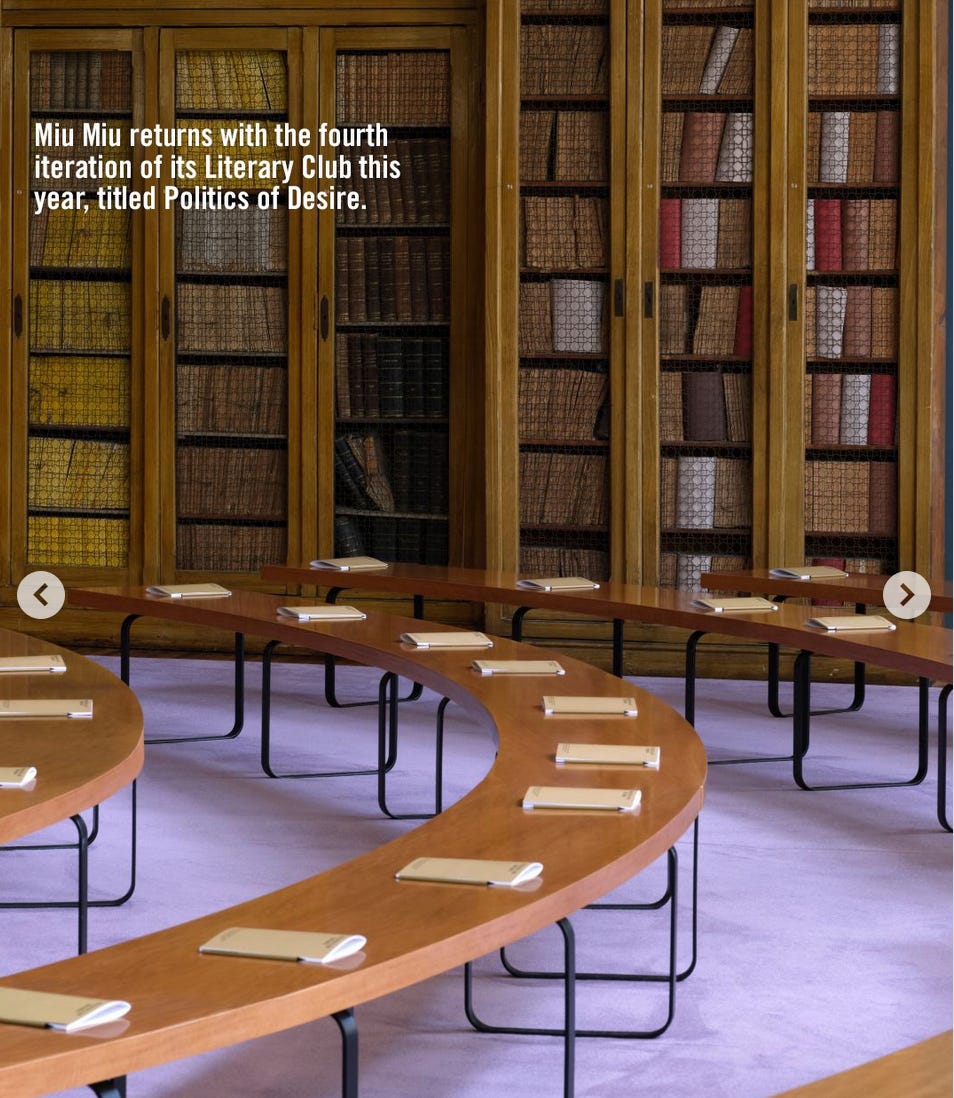
Ana Gavrilovska’s piece on Thomas Pynchon (and her discussion of the article, Pynchon more broadly, and technofascism) is a reminder that an almost 90-year-old dude famous for never appearing in public somehow still has interesting things to say about the current moment. While writers—including academic ones—are encouraged to be on social media to sell their books (because the publishers seem uninterested in doing that themselves), a preprint from Peter Törnberg and Richard Rogers sees a turn towards a post social media moment.
YouTube, more an algorithmic broadcasting platform with a comment section than a social media site, has lots of videos about film and literature that I don’t watch. But I did like “Novels are written like we’re stupid now. Are we?”, which uses, among others, Anna Kornbluh and Nomwali Serpel’s ideas in an analysis of current literary production and cultural/media literacy. Because Immediacy is probably one of the best articulations of our current moment of cultural production, Kornbluh has been on The American Vandal podcast, a who’s who of cultural critics worth reading. The American Vandal also has a 1977 lecture from Fredric Jameson (I’ve had a much different “Jameson voice” in my head when I’ve read him).
Kate Wagner is a great case of a writer whose expertise in a fairly technical area—architectural acoustics—makers her one of the best writers for non-experts like me (and not just in architecture). You can never go wrong reading McMansion Hell (I worked in residential steel fabrication and installation in 1990s Chicagoland, so I particularly enjoy when she rips into places like South Barrington, Illinois). Recently Wagner wrote “America’s True Fascist Architectural Legacy” about logistics warehouses turned ICE detention centres.
Two quick pieces about politics: First, the problem with CEO Brain, as seen in the case of NZ Prime Minister Christopher Luxon. Second, a new theory that the Butler, Pennsylvania assassination attempt on Donald Trump was staged. The false-flag staged attempt theories have gained steam in the month of April, as the events at the White House Correspondents’ Dinner were also quickly taken as a staged event. Olúfẹ́mi Táíwò’s piece in Boston Review places the third public attempt on Trump’s life in the broader context of the careless people who enjoy elite positions believing that “war, disease, and apocalyptic destruction are things that will only ever happen to poorer and browner people.”
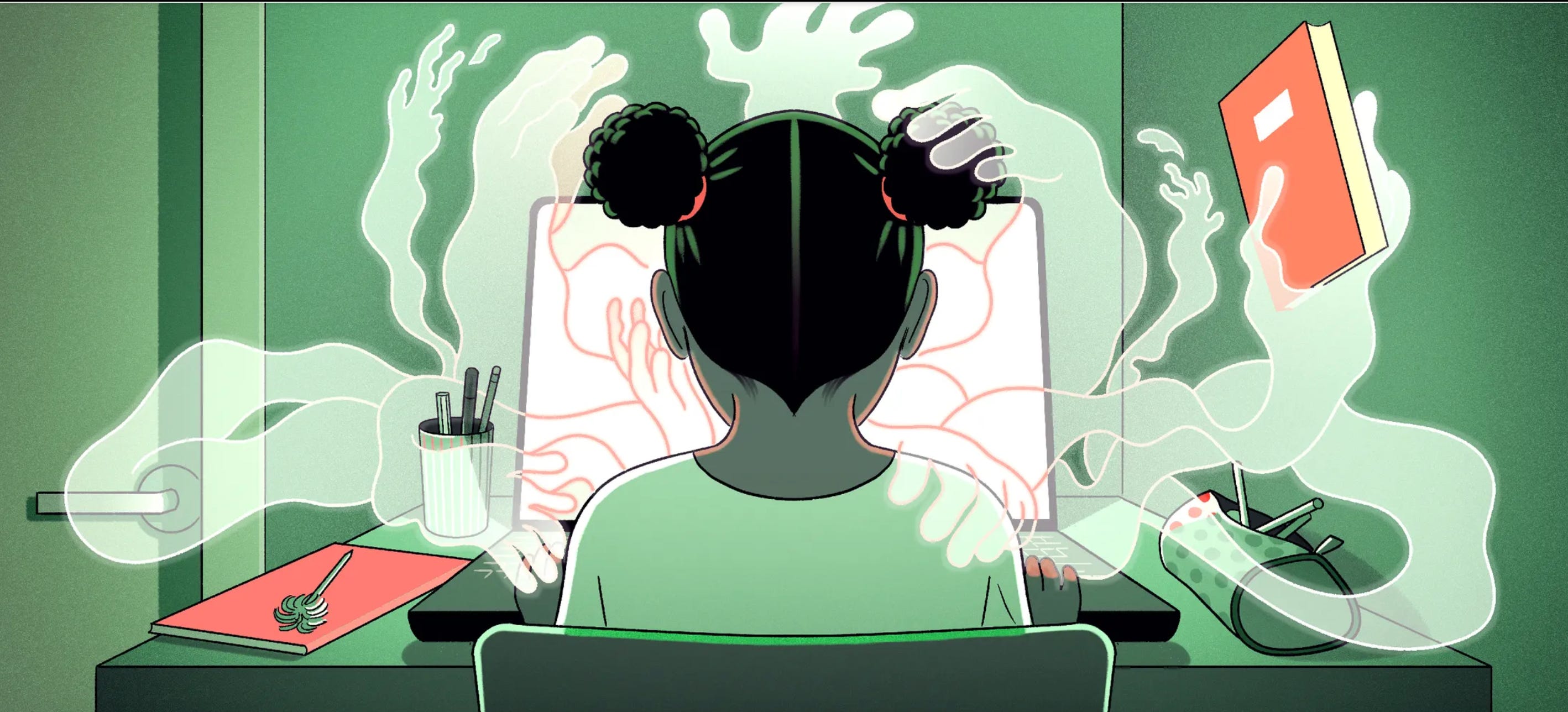
My service role involves wrangling all the PhD proposals for our Media, Film and Communication Programme, and they’re mostly about AI and/or written with AI. Note to potential PhD students: I write about roads-and-sewers infrastructure and not media infrastructures. In other words, here come some pieces about AI. History is always a good place to start, and Sarah Murray published part of the introduction to their book Powered by Smart: A Prehistory of Everyday AI here. While Murray wrote the book, it’s not quite clear who/what wrote a recent piece in the New York Times, which Maggie Harrison Dupré wrote about in “We Talked to a Writer Accused of Publishing an AI-Generated Essay in The New York Times.” Against the logic of AI inevitability, the less convinced fight against AI getting shoved into everything, including education. AI in education gets a serious New Yorker piece this month. It’s funny in a grim sort of way that “Sam Altman’s Coworkers Say He Can Barely Code and Misunderstands Basic Machine Learning Concepts.” Finally, Altman’s recent experience of fear in the face of the mortality that all of us must face but Silicon Valley dudes think won’t apply to them appears when Brian Merchant asks “Why the AI backlash has turned violent,” linking the recent anti-data centre/anti-Sam Altman violence to Luigi Mangione and more. Merchant notes there are two common statements AI boosters make: AI could Skynet us into extinction and it’s going to eliminate your job. That may be why I find the vulgar Marxist question Merchant poses pretty compelling: “ AI may one day cure cancer, we’re told; great, even if we believe that, who will be able to afford the treatment?”
On that note, happy end of the semester.
Dr Christian Long is a Senior Lecturer in Media, Film and Communication at the University of Otago. He specialises in Hollywood cinema and has published on infrastructure and film, post-apocalyptic movies and the comedies of Albert Brooks.
News and Notes
Upcoming Events and Calls For Papers
Events
Media, Film & Comms at U Otago are hosting Dr Matthew Ellis (U Southern California) on zoom to present on ‘What was postmodernism?’ on the 5th May at 10am NZT. Register for the zoom link.
Conferences and Symposia CfP
The 2026 He Kai Kei Aku Ringa / Conference for Social Sciences website is live. This event will be held between 2nd-4th December 2026 at the U of Auckland. Paper, and panel, proposals are welcome for the ‘Media and Communication’ stream and are due by 31st August 2026. For more information, please contact css2026@auckland.ac.nz. ACMe members, Chris McMillan, Rosie Overell and Leon Salter are hoping to put together at least one panel with ‘ACMe’ signage - we will see you there!
The Culture-Centred Approaches to Research and Evaluation (CARE) unit at Massey U. (Palmerston North) is organising the International Communication Association (ICA) Oceania Hub Event between 6th and 7th June 2026. The theme is ‘Communicative Equality against Empire: Socialism, Anticapitalism, Anticolonialism, Antiimperialism’. Please send your proposals for papers, panels, workshops by May 2nd to Debalina Dutta D.Dutta@massey.ac.nz.
Publication CfP
ACMe members, Alex Beattie, Valerie Cooper, Lewis Rarm and Emma Tennent have secured a book contract with Routledge for a textbook, tentatively titled: Communication in Aotearoa. They are calling for abstracts and proposals for chapters, deadline on 31st July 2026. The final chapters would be 6,000-7,000 words and be finalised by May 2027. Please contact Valerie at valerie.cooper@vuw.ac.nz for more info.
Media Appearances
Michael Daubs and Ethan Plaut, both ACMe members, alongside colleagues in Psychology and critical AI studies co-wrote a piece for The Conversation on whether a “fairer and safer AI” is possible.