

(accumulated by Erin Harrington / English at the University of Canterbury; we will rotate ‘accumulators’ month by month - if you are an ACMe member and have some leads to include in the accumulation, drop us a line at acmesmokescreen -at- gmail etc.).
Hollywood is back, baby! Did you hear? Everyone is saying it.
In the last few years there’s been a COVID-related slump in cinema attendance, a raft of theatre closures, a dwindling supply of new young movie stars, aggressive behaviour from Streaming, and Premium, Video On Demand providers banking on consumer conversion, US film industry layoffs and fewer films, and years worth of confusion about what cinema even is anymore in the age of shortened theatrical distribution windows. All this presumes your film gets to cinemas at all.
Despite all this, the last few months have delivered large at the box office for the US film industry. Audiences are returning in person to movie theatres and everyone is thrilled.
Sure, there have been some big name flops: franchise slop like Masters of the Universe and Supergirl, and the fun but benign Star Wars: The Mandalorian and Grogu, which felt more like 3 episodes of television jammed into a branded trenchcoat. There has also been the weirdness of Melania Trump’s vanity / propaganda film, and of the troubled Michael Jackson bio-pic, which absolutely raked it in, but at what cost?
Otherwise?
A banger.
The US domestic box office over the last few months - the northern summer period - has topped $4 billion. Obsession and Backrooms, low budget films by YouTubers that apparently ‘came from nowhere’, have built on years’ worth of solid indie horror growth to wipe the floor with the competition and startle media execs who seem to forget that there are people under the age of 45 who watch and make (and line up for) movies. Project Hail Mary shot straight out into space (amaze). The Odyssey has been such a hot ticket in IMAX that people have scalped tickets, crashed booking websites, and tried to postpone births to see the film as Christopher Nolan intended. The film still has regular session times here in New Zealand, two and a half months after its initial release.
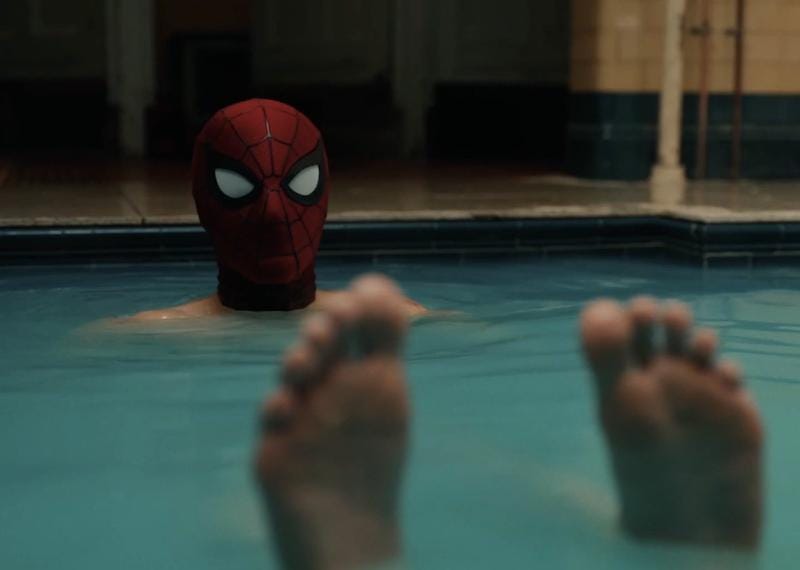
Presiding over all this like an everyman hero perched on the edge of a skyscraper is Spiderman: Brand New Day, which managed to buckle sequelitis and offer one of the biggest opening weekends of all time on the back of well-tended IP, great performances by charming star leads, and a cute, three-star story with genuine emotional stakes. And highly anticipated Avengers and Dune films are yet to come this year..
Bloomberg opened a recent editorial appraising the turnaround with the phrase “Hollywood has once again cheated death”, noting the success of everything from weird indie genre pics to big studio hits.
This sits within the context of enormous studio upheaval at the legacy studios and the incestuous but fairweather relationship between big tech and big media. It also comes at a time where, in the USA at least, traditional filmmaking practices (including the industry’s historic but now fragile relationship to Hollywood, and California more widely) are up in the air – and also a political lightning rod.
This shift is welcome for those who love film. Further, the various discourses and frames that try to explain this upsurge in cinephilia - sitting at the intersection of a crunchy mix of past business and creative decisions, current social and economic factors, and the unpredictable nature of human behaviour - are fascinating. Then add memes, social media trends, and even things like the weather into the mix… who would try to prognosticate?
Maybe it’s because Gen Z is going to the cinema in droves. Older reporters, taking on the role of intergenerational anthropologists, have hypothesised (mostly after talking to a representative sample of three young people) that this is because films offer a space without digital distractions where you can skip the doomscrolling, and perhaps an opportunity to socialise in person (with cinemas acting as a third place).
Maybe it’s because film can be treated as an event, and not a second (or third or fourth) screen burbling away in the background. Cinema-goers are happy to pay extra for screenmaxxing with premium large formats. These include IMAX (with particular thanks to Nolan), Hoyts’ in-house brand Xtremescreen, or Disney’s new and perhaps a little cringey ‘Infinity Vision’ certification, which is rolling out with its encore screenings of Avengers: Infinity War, so that you can do your homework before the release of Avengers: Doomsday in December.
Viral marketing has a bit to do with it, and so does NZ startup, social media site Letterboxd.
Maybe it’s because, bar a handful of standout shows (that are nonetheless complete throwbacks) post-peak TV is annoying and expensive, and also maybe dumb and kinda bad. The fragmented mediasphere is even driving people burnt out by subscriptions back (shock!) (hooray!) to physical and analogue media.
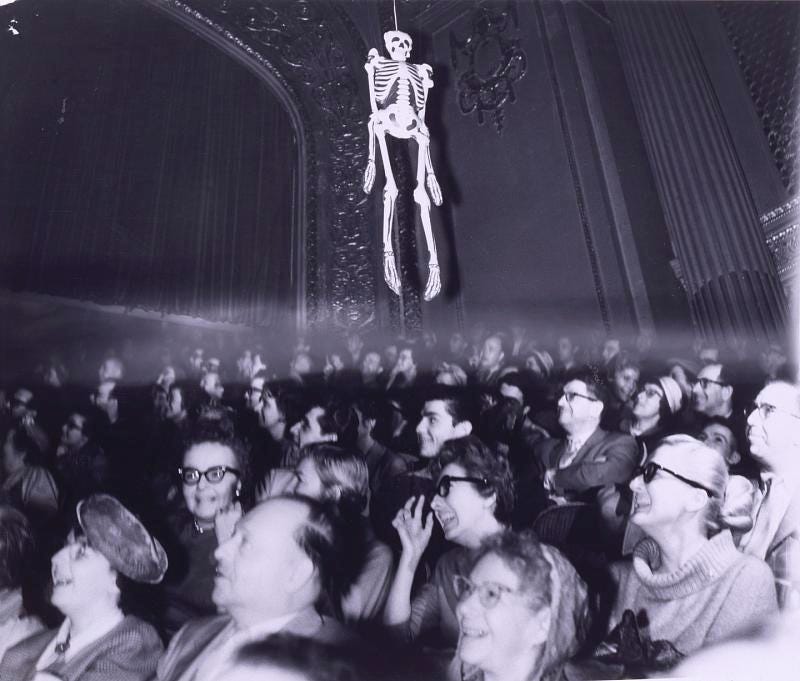
There are also some other great gimmicks that continue cinema’s long history of trying to get you in the door by giving you a special experience. If you want to get messy you can sign up for additive haptic experiences with D-Box seats, depending on how much your local cinema has invested in tech (and raised the price of popcorn) and how much you enjoy rollercoasters. It’s not quite flying glow in the dark skeletons or electric shocks, but I admit being envious of those with access to 4DX seating outside of New Zealand who are getting a face full of snow, gunsmoke and implied gore in their screenings of Resident Evil.
I’m curious about how much this is translating to New Zealand, noting that Val Morgan (who as advertisers have skin in the game) have reported very strong ticket sales last summer, and some impressive numbers for The Odyssey (which just keeps going, two months on) and the dreary live-action Moana. Regional cinemas seem to be doing okay too.
How about anywhere else?
Who can say.
Outside of art house and indie spots that have gone hard on film curation and customer service, my preferred local cinema is a permanently deserted and possibly haunted Reading, where the two lonely staff members on the tills have the put upon air of bellboys indentured to a cursed Victorian hotel. There aren’t even enough people working there to check your ticket. It’s hard to gauge the business model; is it a front for something else? The few people attending films are mostly small groups of punters in pyjamas and Uggs, lugging Woolworth’s bags full of snacks, polar fleece blankets, takeout pizzas, and bags of Burger King. Perhaps to keep trucking - to keep being back, baby - cinema just needs to lean hard into slumber party mode. Just don’t make some poor kid on minimum wage pick up after you.
News and notes:
Conferences & Symposium CfPs:
The International Association for the Study of Popular Music (IASPM) will be holding its biennial conference at Te Herenga Waka/Victoria University of Wellington, Aotearoa/New Zealand, from November 29th - December 3rd, 2027.
Abstracts are due on December 1st 2026. Please send to iaspm2027@gmail.com. Applicants will be notified of acceptance no later than April 1st, 2027.
More info:
‘Pop goes the world’, Montreal’s Men Without Hats once sang. A quaint ditty about a couple, Johnny and Jenny, in a band named ‘The Human Race’ searching for meaning and salvation in a pop career. It served as a tribute to the power of popular music as a diversion, but also a possibility, an entry point into another way of life, another world. Riffing on this, the 24th biennial IASPM-International conference aims to honour the ‘pop’ in popular music but ground it, much like our song’s protagonists, in the human race. If one version of ‘pop’ is about the disposability, ephemerality and escapism of certain forms of popular music, other versions want to hold on to its pleasures, its ability to lift people up, through individual and collective empowerment. And, more so, ‘pop’, of course, also points to both a fragility and an explosiveness, a calamitous bursting. In a world riven with precarity, uncertainty, and the political vicissitudes of mercurial leaders, a world threatening to go ‘pop’ also carries with it a visceral sense of inescapable existential urgency.
These are just some of the many valences of ‘pop’, but they serve as starting points for a range of provocations and sites of interrogation. We can ask, for example, how do we, as popular music scholars, music-makers, listeners and fans, contend with these differently charged notions of ‘pop’? Across the many worlds we straddle, in our research, writing, creative practices, politics, pedagogy and our lives, how do these multiple senses of ‘pop’ resonate and synergize? What are some of the challenges and promises we face when we try to grapple with and harness the semiotic charges of ‘pop’ in these diverse arenas? What, we might ask at this critical juncture, are some of the ways popular music and popular music studies can be made to ‘pop’ in times of crisis?
New! Media Innovation Lab launches at Canterbury.
ACMe member, Prof. Donald Matheson shared that Canterbury recently launched a practice-based research space called the Media Innovation Lab. This new lab “hosts experiments in public storytelling by some of Aotearoa’s top journalists and documentary-makers. Our journalists in residence produce content you’ll find on leading media outlets”.
The first media professional in residences are Charlie Mitchell and Nic Low will each spend 12 weeks in the Media and Communication and Digital Screen departments, working on separate projects.
If you are talking with journalists or documentary makers who have a project that will help take media practice in Aotearoa forward, please put them in touch with the folks at Canterbury (Jim Marbrook, Donald Matheson, Tara Ross or Conan Young).
Media Peripheries journal CfP:
Media Peripheries is a media and communication studies journal concerned with the field in Aotearoa New Zealand. Our journal conceives the broad notion of periphery as referring to both the location of Aotearoa, at the margins of the core, as well as topics and voices that are under-researched within media and communication studies. Media Peripheries aims to be a forum for academic debates that are regional in focus, global in scope and capture media as a force of cultural change. We welcome submissions across a broad range of topics including media case studies, industry policy, cross-cultural communication, comparative studies and Aotearoa’s position in a moment of tech-capital consolidation. Scholars from across the world and at any stage in their academic journey are encouraged to submit. We offer an engaged editorial team and process aimed at supporting timely publication of research that helps guide us towards what comes next in the field.
Direct any queries to Olivier Jutel or Valerie Cooper or make a submission via our website.
Publications:
Forthcoming (already available as an e-book!) from ACMe secretary, Rosemary Overell, Blood Duster’s Fisting the Dead (Bloomsbury Academic).