
Desperately seeking silver linings.
An idiosyncratic round up of media & comms news and events for May 2026

(accumulated by Valerie A. Cooper / Te Herenga Waka – Victoria University of Wellington) we will rotate ‘accumulators’ month by month - if you are an ACMe member and have some leads to include in the accumulation, drop us a line at acmesmokescreen -at- gmail etc.).
There is far too much depressing news in the world today, so I’ve decided that this month’s ACMe accumulation will focus exclusively on positive news. I’m sure there’s lots of good news that happened this month that’s simply been overlooked, nē?
For starters, May 3 marked World Press Freedom Day. Happy World Press Freedom Day to those who celebrate!
Just kidding, press freedom around the world is currently, unsurprisingly, incredibly dire yet somehow becoming increasingly worse. The UNESCO World Trends Report 2022-2025 highlights that world press freedom has had its steepest decline since 2012, while self-censorship has grown by more than 60% due to reporters’ fear of violent retaliation. The Reports Without Borders 2026 report released in May states that more than half of the world’s countries are now categorised as in “difficult” or “very serious” situations for their press freedom. This means the world as a whole has the lowest press freedom score since RSF started monitoring 25 years ago.
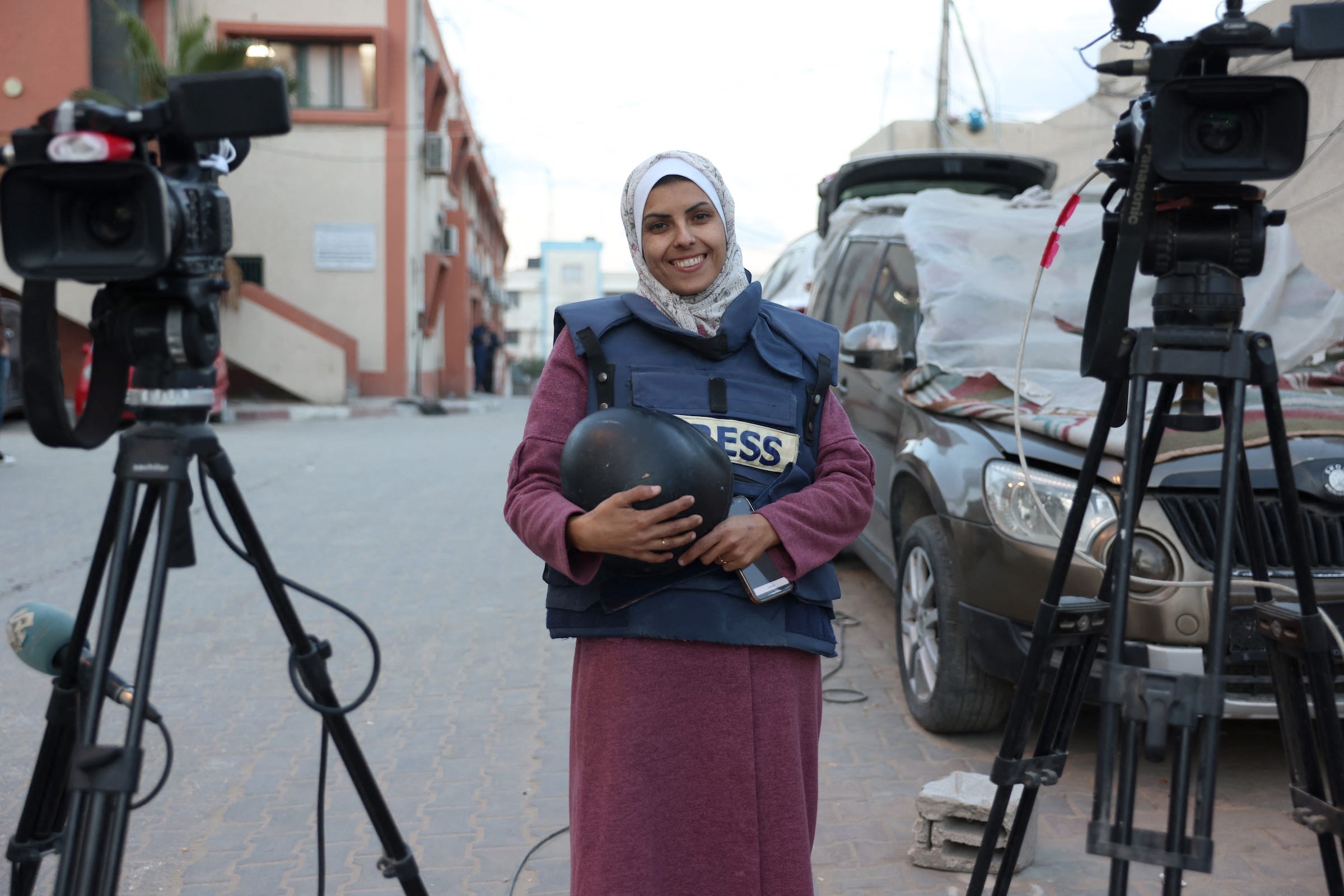
And no wonder – “journacide”, or the targeted killing of journalists, is now a trending neologism. Though typically associated with the Israeli Defense Forces’ targeting of Palestinian journalists (the Committee to Protect Journalists has a dedicated running tally, currently sitting at 262 media workers killed), the concept is certainly not limited to the region: a recent Reuters article highlights that Mexico has become the deadliest place to be a journalist in the Americas, with nearly a third of accused aggressors being outed as public officials.
Yikes.
So perhaps in that context, we can consider it good news that New Zealand has only dropped four points on the World Press Freedom Index since last year?
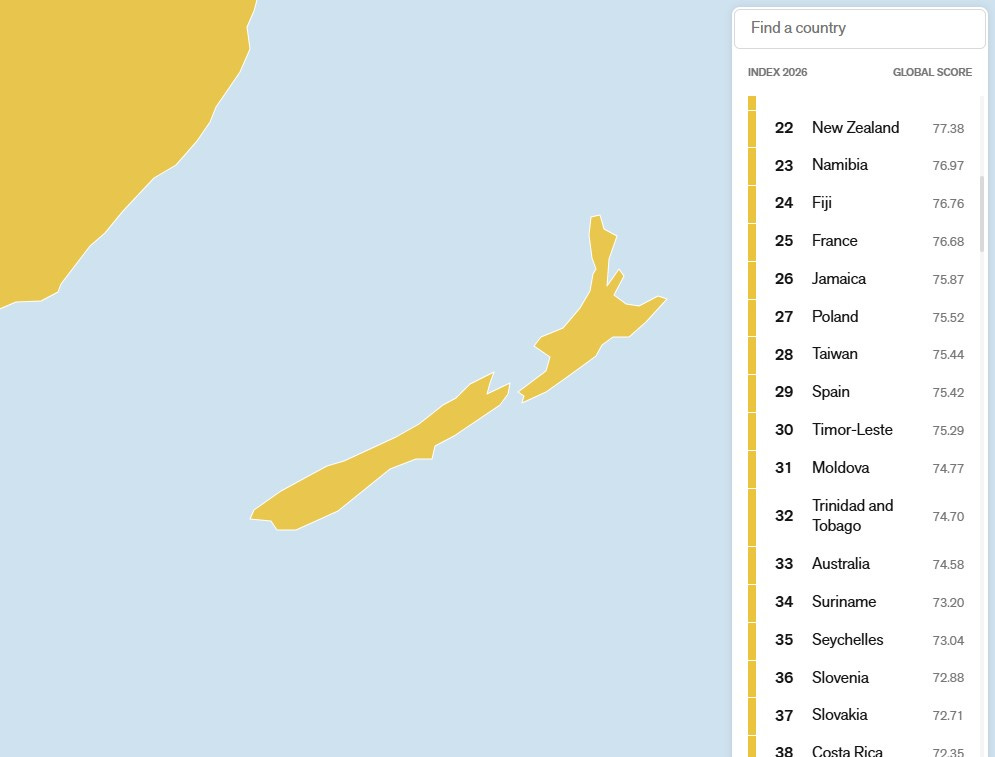
Except not really, because May was quite a month for the New Zealand press as well!
The attacks on media freedom here in Aotearoa are not overtly violent, but are largely economic and discursively-based. While the current coalition has long been open about its disdain for public service media, the elimination of the Broadcasting Standards Authority still came as a blow.
Even before the official announcement, former BSA member Pulotu Tupe Solomon-Tanoa‘i highlighted in an e-Tangata article just a few of the ways that the BSA has supported New Zealanders – from issuing inclusive language guidance to protect trans, non-binary, and takatāpui Kiwis, to setting the standard that complaints about the use of te reo Māori on air would no longer be considered due to it being an official language.
But it’s fine, media outlets will now “self-regulate” in the same way that social media platforms like Meta and X self-regulate (which means they definitely aren’t harvesting data from our private messages, right?). I’m sure we’ll be fine. Is what I keep trying to reassure myself.
On a positive note, ACMe members came out swinging in response to the announcement. Peter Thompson penned a piece for The Conversation the very next day, and a team of scholars wrote and sent a letter to the Minister that was signed by a significant chunk of scholars. Keep fighting the good fight, friends.
And forgive me if I don’t sympathise with the Minister for Media and Communication’s whine about “the same old cliché every time attacking a centre-right government” at the Aotearoa Music Awards (Ka ahora, e hoa. Or as we say in Texas, “bless your little heart”). Dame Lynda Topp’s ‘attack’ has nothing on what the government is doing to press freedom in this country.
Finally, genuinely, some happier news.
May 4-10 marked New Zealand Sign Language Week, and this year celebrated 20 years of NZSL being an official language of Aotearoa. As a perpetually amateur linguaphile, I would normally write some phrases here for you to try out. But there are limitations to the written word, so go pick your favourite word to learn from Deaf Aotearoa’s This Sign What? page.
The film Prime Minister took home Best Documentary at the 2026 News & Documentary Emmy Awards, in another sign of Aotearoa cinema punching above its weight on the world stage. Yet the Prime Minister herself has resorted to living in Australia because, as the security and protestor presence outside her recent Wellington event reminded us, New Zealand is certainly not immune to the right-wing violence that we see overseas.
Enjoy good satire? Check out this piece from The New Humanitarian’s Patrick Gathara documenting his “dangerous mission to explore the forgotten crises of the European pseudo-continent”.
Aotearoa has its own media and communication journal, and it wants submissions from you and your students! Media Peripheries aims to be a forum of academic debates that are regional in focus yet global in, and offers an engaged and supportive editorial process.
I managed to write this entire accumulation without a single mention of a certain US president or AI. You’re welcome. And also, I’m sorry I’ve made you think about them again now.
Dr Valerie A. Cooper is a Senior Lecturer in Media and Communication at Te Herenga Waka | Victoria University of Wellington in Aotearoa New Zealand. Her critical research focuses on global power dynamics and international relations through communication, especially in the areas of international news media, public diplomacy, and transnational education.
News and notes:
Events:
ICA 2026 Oceania Regional Hub, Communicative Equality against Empire, hosted by the Center for Culture-Centered Approach to Research and Evaluation (CARE) at Massey University in Te Papaioea Palmerston North, Aotearoa New Zealand, on Saturday 6 and Sunday 7 June 2026.
Over two days we ask a single question. What would communication look like if it were organised for equality rather than for empire. Organised across the four commitments of socialism, anticapitalism, anticolonialism, and antiimperialism, the Hub brings together scholars and movement partners from Aotearoa, Australia, Indonesia, the Philippines, India, Pakistan, Iran, Palestine, China, Spain, the United States, and Thailand. We run a single track, so we stay in the same room and build the argument together.
Register and pay: https://pay.massey.ac.nz/products/register-and-pay-for-the-ica-2026-hub-conference
Conferences & Symposium CfPs:
WHAT THE * IS GOING ON? RETHINKING CULTURAL STUDIES IN TIMES OF CRISIS
Conference for the Cultural Studies Association of Australasia 2026
December 7, Prefix Postgrad Day | December 8-10, Full Conference Program
University of Technology Sydney, Ultimo, New South Wales.
We find ourselves in a historical moment marked by entangled crises. From Russia's invasion of Ukraine to the genocide in Gaza perpetrated by Israel, from an accelerating climate emergency to deepening anxieties about the integrity and sustainability of universities, world-historical events appear poised at the precipice of radically diverging possible futures. Geopolitical conflicts now also converge with a profound reorganisation of cultural production under platform capitalism: artificial intelligence has become an infrastructural force transforming how culture is created, circulated, and valued, while subscription-based streaming services have redefined the ways that cultural objects are owned, accessed, and discarded. Correspondingly, new forms of digital cultural life are proliferating at speed, from rapid fire vertical mini-dramas to cross-border livestream e-commerce to the arrival of the virtual boyfriend. These developments unfold alongside ongoing political transformations across the Asia-Pacific region, including the rise of feminist activisms across East Asia, mass progressive industrial action in Aotearoa, and the intensification of police powers, surveillance, and settler colonial violence in Australia after The Voice.
What the * is going on? What kinds of theoretical, methodological, and political interventions can Cultural Studies offer to understand such crises? What ways of knowing, communicating, and living might allow us to respond to these conditions collectively? What forms of power - algorithmic, racialised, colonial, ableist, and gendered – can become visible and legible through a Cultural Studies lens, and how might this shift, in turn, Cultural Studies’ relationships to other disciplinary formations? Further, how are Indigenous thinkers and communities changing the ways that culture, identity, place, and power are being understood during such periods of global upheaval?
CSAA 2026 invites you to join us in rethinking as an urgent intellectual and political task. It opens space for diverse contributions while foregrounding a reflexive inquiry into what cultural studies is, what it does, and what it might become under conditions of structural transformation and technological upheaval. Building on CSAA 2025’s focus on the “heat” of intensifying relations across cultures, media, environments, and governance, CSAA 2026 faces up to this moment in which such intensities have escalated, becoming entangled, uneven, and increasingly difficult to navigate.
Publications:
ACMe member Dr Christian Long (Otago) published an article on the Bourne films in Popular Culture Studies Journal: ‘The Bourne Movies, CIA Office Workers, and Models for Change, or, The Zorn Identity’.