
ACMe Accumulation July 2026
An idiosyncratic round up of media & comms news and events for July 2026 by Michael Daubs.

(accumulated by Michael Daubs / Media, Film & Communication at the University of Otago; we will rotate ‘accumulators’ month by month - if you are an ACMe member and have some leads to include in the accumulation, drop us a line at acmesmokescreen -at- gmail etc.).
It’s been a couple of months since the last ACMe Accumulation and it is difficult overlook that a major sporting event captured the world’s attention over the past few weeks. I am referring, of course, to the 2026 NHL Entry Draft.
Okay, maybe the FIFA World Cup 2026 received a bit more attention. In the end, La Roja (Spain) took home the big prize after what RNZ Nights host Emile Donovan called “a rubbish game of football”.
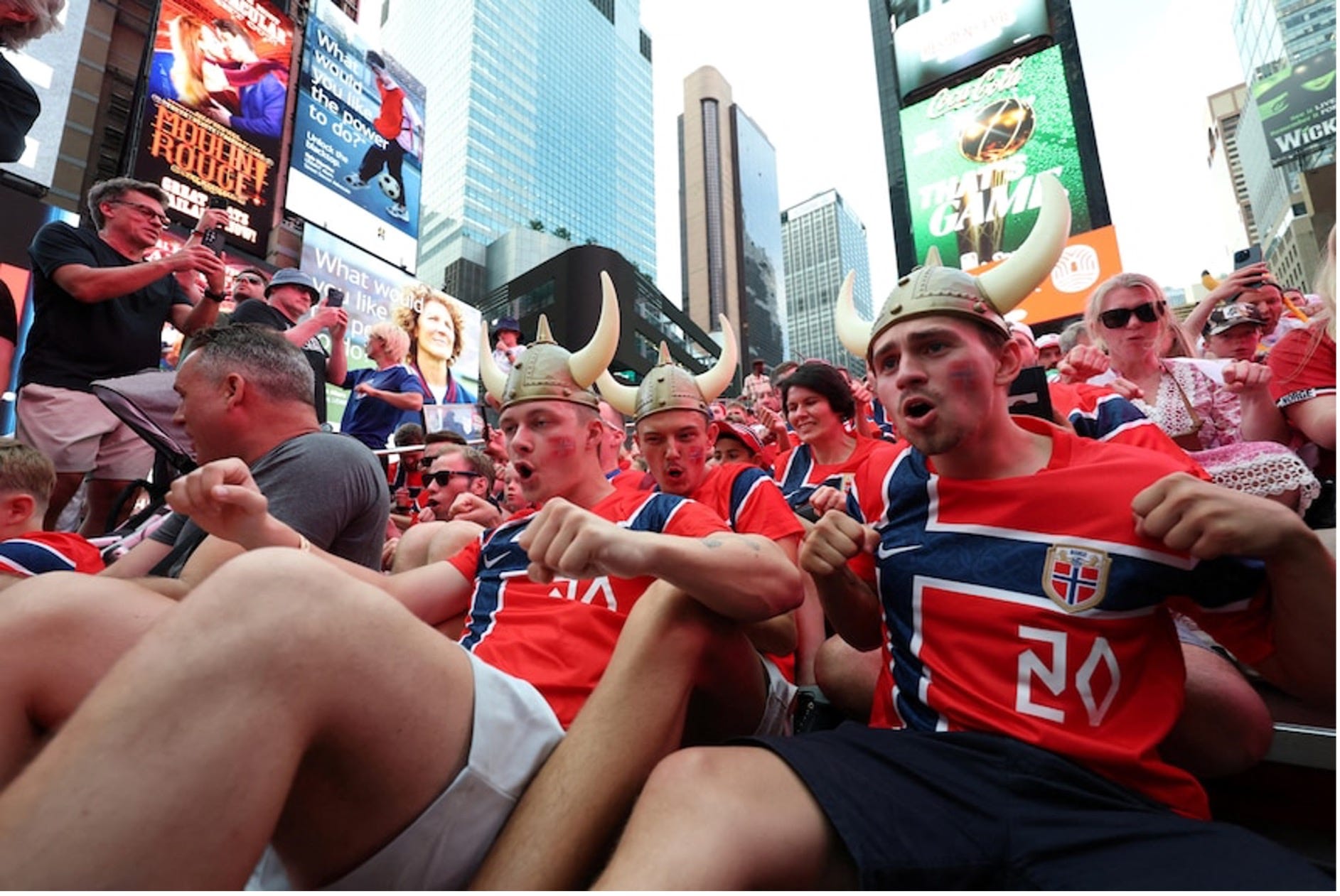
As a media spectacle, this year’s World Cup did not disappoint. New Zealand’s All Whites returned to the World Cup for the first time since 2010, even if they were the lowest-ranked team in the tourney. Co-host Canada earned its first-ever World Cup victory and made it past the groups stage for the first time. Norway played in its first World Cup this century, thanks in large part to enigmatic star Erling Haaland. The team’s “Viking row” celebration became a fan favourite on social media.
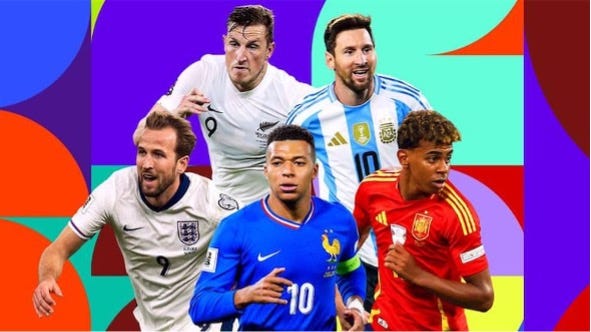
While the tournament eventually came down to perennial powerhouses England, Spain, France and Argentina, smaller countries took advantage of their time in the spotlight. Curaçao became the nation with the smallest population (~156,000 people) to ever reach the World Cup, and Cabo Verde (~530,000 people) became the smallest nation by population to reach the knockout stage.
The World Cup made news off the pitch as well, much of which spread via social media. For example, droves of Scottish fans, known as the Tartan Army, made their presence felt both by drinking bars dry, and for their conviviality and generosity with other fans they met along the way. Several Europeans posted about their discovery of ranch dressing. International visitors to Texas raved about the supersized Buc-ee’s petrol stations (even if, as John Oliver discussed, the company can be a bit litigious).
Here in New Zealand, media rights were big news. TVNZ won exclusive broadcast and streaming rights to the World Cup. TVNZ provided an event pass for $44.95 that allowed viewers to access to all 104 games via its TVNZ+ app, marking the first time the state broadcaster ever charged for content.
But, in what we can only be interpreted as a sign of the times, politics and corruption were a feature of the FIFA World Cup as well, resulting in media coverage that may have put a damper on some of the more positive experiences being shared online. (Perhaps mentioning ‘FIFA’ and ‘corruption’ in the same sentence is redundant.)
Global conflict cast an early shadow over what should be an international celebration. Iran’s participation in the World Cup was thrown into doubt after the US, one of the host countries, attacked Iran in a coordination with Israel in the weeks leading up to the World Cup.
Issues with visa approvals for some players and officials travelling to the US led some, including UN High Commissioner for Human Rights Volker Turk, to comment on the treatment of migrants in the US, including issues such as racial profiling, surveillance, and immigration enforcement policies.
Both FIFA president Gianni Infantino and US President Donald Trump did nothing to quiet accusations of corruption after Trump called the FIFA head to have a red card and mandatory one-game suspension against US player Folarin Balogun rescinded, making Balogun eligible to play in a match against Belgium. (Apologies for mentioning the US President after Dr Valerie Cooper worked so diligently to avoid doing so in the last Accumulation.)
Eventually, however, visa issues were resolved, Iran’s national team was able to take part (playing New Zealand to a 2-2 draw in those countries’ opening match), and the US ended up losing to Belgium despite Balogun’s participation.
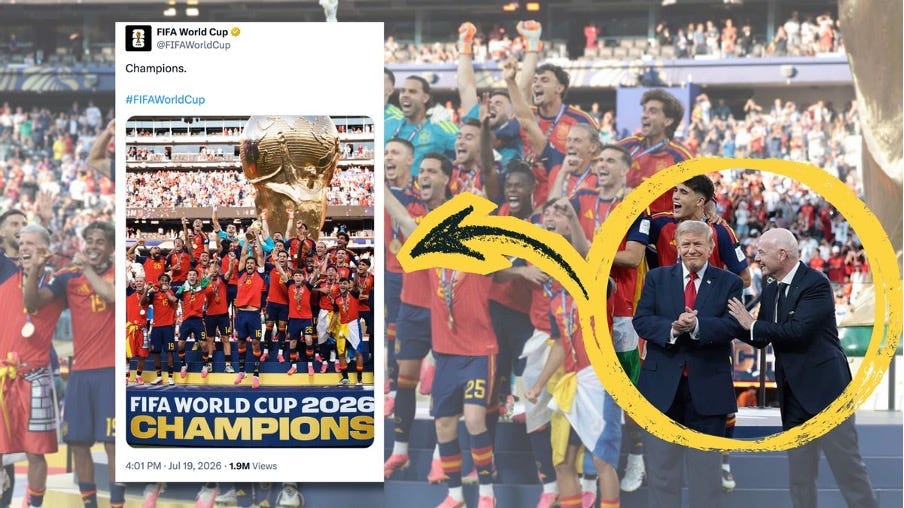
In the end, despite that “rubbish finale”, a divisive first-ever halftime show, and an awkward moment where Trump refused to be ushered off the stage to allow Spain to celebrate its win, the World Cup ended up being a “rousing success” in the eyes of some commentators. (Spain’s national team would eventually crop Trump out of photos, though there were false rumours circulating online that Trump was digitally edited out instead).
All good, then? Not quite.
Shortly after the tournament ended, the Group of Copenhagen, an international watchdog for suspicious sports betting, flagged seven potential betting irregularities related to the FIFA World Cup, including some connected to the overturning of Balogun’s red card. Notable is that, for the first time ever, the Group of Copenhagen monitored prediction markets such as Polymarket and Kalshi. These potential irregularities are increasingly common, in part due to the long history of “datafication and financialization in sports business and culture”, and will no doubt dog other large sport media spectacles in the future.
In other news:
· The UK instituted an age-based social media ban even more restrictive than Australia’s. In addition to a blanket ban for those under 16 years of age, users under 18 years of age would be subject to a “scrolling” ban, i.e., platforms would no longer be able to offer these users interfaces featuring an “endless scroll”, as well as mandatory regular chatbot breaks. France and Indonesia are among other countries to recently adopt age-based restrictions.
· Here in Aotearoa New Zealand, some teachers suspect the Department of Education used AI to draft its new school curriculum after noticing “hallmarks” of AI including “misplaced definitions, factual mistakes and American spelling”. (Sorry, I ended Val’s avoidance of AI news, too.)
· Finally, we have a new puppy, Monty, in our household, a welcome addition after the passing of our beloved 10 year old Figgis back in April. Just thought everyone might appreciate something adorable for a change.

Dr Michael Daubs is a Senior Lecturer in the Media, Film & Communication Programme at the University of Otago, in Dunedin, New Zealand. His research examines the political, social, and economic potential of information communication technologies (ICTs) and social media while also interrogating common claims and assumptions about these platforms. H
News and notes:
Conferences & Symposium CfPs:
The folks at University of Waikato invite proposals for Expanded Documentary in Aotearoa conference to be held 19th-20th April 2027 at Waikato. The abstract deadline is due 25th September 2026 to Cherie Lacey cherie.lacey@waikato.ac.nz.
More info:
Drawing inspiration from Jihoon Kim’s concept of documentary’s “expanded field”, the conference asks what documentary might be—or become—beyond conventional understandings of nonfiction cinema. We welcome scholarship and creative practice that explores documentary across film, installation, performance, sound, digital media, Indigenous storytelling, animation, archives, journalism, activism, and other hybrid or experimental forms.
The conference aims to bring together scholars, filmmakers, artists, and creative practitioners to rethink documentary as an expansive field of research and practice. We are especially interested in work that engages with Indigenous knowledge, decolonising approaches, emerging technologies, creative research, and new modes of documentary production, distribution, and reception.
The International Association for the Study of Popular Music Conference ‘Pop Goes the World’ will be held at Te Herenga Waka / Victoria University of Wellington in Aotearoa / New Zealand between 29th November and 3rd December 2027. Please submit an abstract of 200-250 words by 1st December 2026 to iaspm2027@gmail.com.
‘Pop goes the world’, Montreal’s Men Without Hats once sang. A quaint ditty about a couple, Johnny and Jenny, in a band named ‘The Human Race’ searching for meaning and salvation in a pop career. It served as a tribute to the power of popular music as a diversion, but also a possibility, an entry point into another way of life, another world. Riffing on this, the 24th biennial IASPM-International conference aims to honour the ‘pop’ in popular music but ground it, much like our song’s protagonists, in the human race. If one version of ‘pop’ is about the disposability, ephemerality and escapism of certain forms of popular music, other versions want to hold on to its pleasures, its ability to lift people up, through individual and collective empowerment. And, more so, ‘pop’, of course, also points to both a fragility and an explosiveness, a calamitous bursting. In a world riven with precarity, uncertainty, and the political vicissitudes of mercurial leaders, a world threatening to go ‘pop’ also carries with it a visceral sense of inescapable existential urgency.
These are just some of the many valences of ‘pop’, but they serve as starting points for a range of provocations and sites of interrogation. We can ask, for example, how do we, as popular music scholars, music-makers, listeners and fans, contend with these differently charged notions of ‘pop’? Across the many worlds we straddle, in our research, writing, creative practices, politics, pedagogy and our lives, how do these multiple senses of ‘pop’ resonate and synergize? What are some of the challenges and promises we face when we try to grapple with and harness the semiotic charges of ‘pop’ in these diverse arenas? What, we might ask at this critical juncture, are some of the ways popular music and popular music studies can be made to ‘pop’ in times of crisis?
Journal Special Issue CfP:
Apocalyptica is calling for papers on Apocalypse now what? Capitalism and the end of the world A special issue guest edited by Sarah Juliet Lauro and Goran Vranešević. The deadline for abstracts is October 31, 2026, please email: publications@capas.uni-heidelberg.de.
Publications:
ACMe member Sy Taffel (Massey University) has published Postgrowth Digital Futures: Digital Technologies, Degrowth, and Radical Abundance with Bristol University Press.
Current ACMe secretary, Rosie Overell published a co-written article (with liz breslin; April-Rose Geers; Arundhati Sethi; Lynley Edmeades and Sabrina Moro) in Counterfutures on Anna Kornbluh’s book Immediacy.
Forthcoming from member Geoff Stahl, Nabeel Zuberi and Holly Kruse is a monograph on Synth-pop and its Repercussions (Bloomsbury).